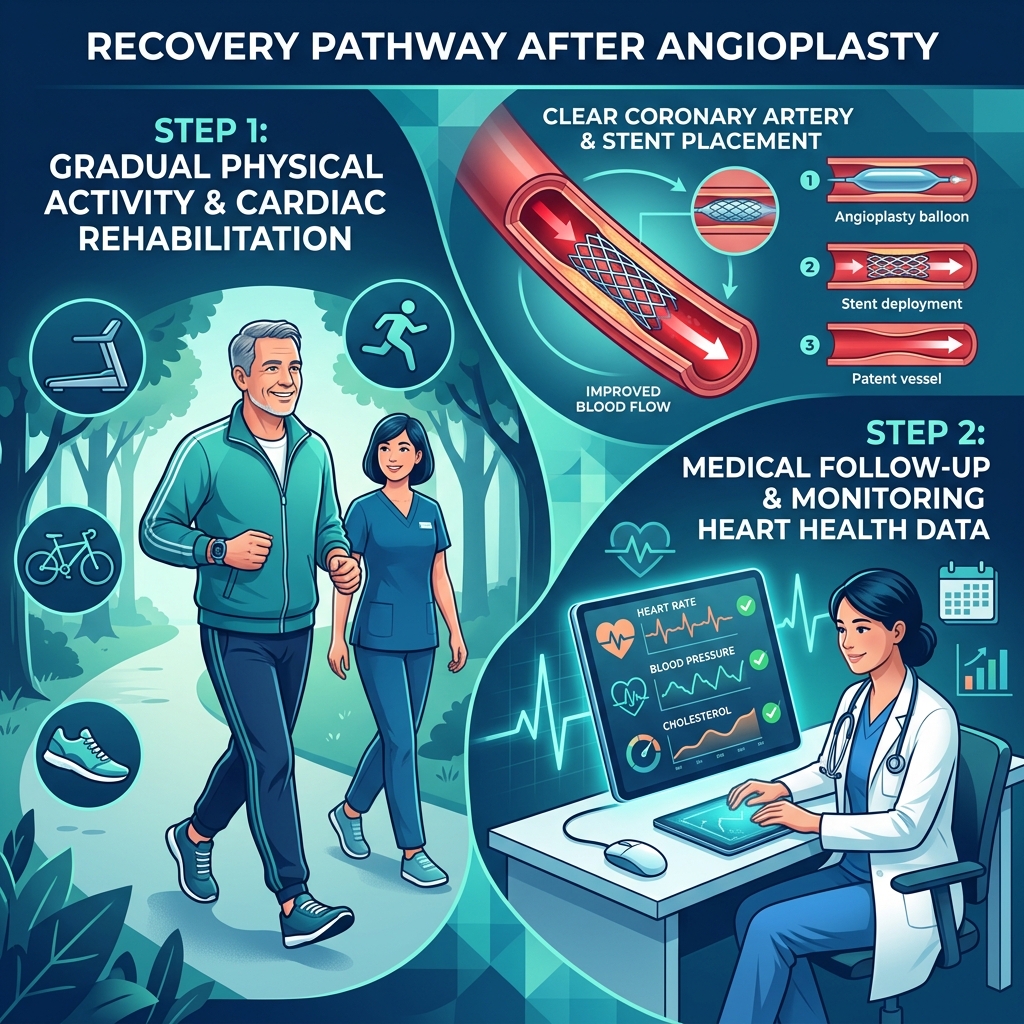
Undergoing a successful coronary angioplasty and stent placement is a major milestone in restoring optimal blood flow to your heart. However, long-term health depends on how carefully you manage your post-procedure recovery.
Understanding Your Stent
A coronary stent is a tiny expandable mesh coil placed inside a narrowed artery during angioplasty. It holds the blood vessel open, allowing blood to flow freely to the heart muscle. Over the next several months, tissue naturally grows over the stent surface (endothelialization), permanently integrating it into the vessel wall.
Critical Rule: Dual Antiplatelet Therapy (DAPT)
To prevent blood clots from forming inside your new stent (stent thrombosis), taking your prescribed blood thinners (such as Aspirin + Clopidogrel/Ticagrelor) exactly as directed by Dr. Beeku Naik DS is non-negotiable. Never stop or skip your blood thinners without consulting your interventional cardiologist.
Recovery Timeline: What to Expect Week by Week
Week 1: Immediate Healing
Rest comfortably at home. Keep the puncture site (radial wrist or femoral groin) clean and dry. Avoid heavy lifting (> 5 kg) or strenuous exertion.
Weeks 2–4: Light Physical Activity
Gradually resume gentle daily activities. Short 15-minute flat surface walks twice daily promote circulation without straining the heart.
Month 2–3: Cardiac Rehabilitation
Participate in structured cardiac rehab exercise routines under guidance. Monitor blood pressure and heart rate during exercise.
Month 6+: Routine Follow-Ups
Undergo regular non-invasive follow-up evaluations (ECG, ECHO, or stress tests) to confirm long-term stent stability.
Key Post-Angioplasty Care Instructions
1. Puncture Site Care
Most modern angioplasty procedures performed by Dr. Beeku Naik DS are completed via the radial artery (wrist). Check the site daily for redness, swelling, or unusual warmth. Slight bruising is normal and gradually fades within 7–14 days.
2. Resuming Work and Driving
For uncomplicated elective procedures, patients typically return to office work within 5 to 7 days. If your procedure followed an acute heart attack, your return to work will depend on your heart function and job demands (consult Dr. Beeku for individual advice).
3. Diet & Lifestyle Modifications
- Heart-Healthy Eating: Reduce saturated fat, trans fat, and sodium (< 2,000 mg/day). Embrace fresh produce, oats, legumes, and lean protein.
- Hydration: Stay adequately hydrated with 2 to 2.5 liters of water daily unless restricted due to heart failure.
- Strict Tobacco Avoidance: Smoking accelerates restenosis (renarrowing). Reach out to our clinic for smoking cessation support.
When to Call Your Doctor Urgently
Contact Dr. Beeku Naik DS or seek immediate medical attention if you experience:
- Recurrent or worsening chest pain or tightness.
- Uncontrolled bleeding or a growing lump at the wrist/groin puncture site.
- Sudden severe shortness of breath or dizziness.
- Fever above 101°F (38.3°C) or signs of puncture site infection.
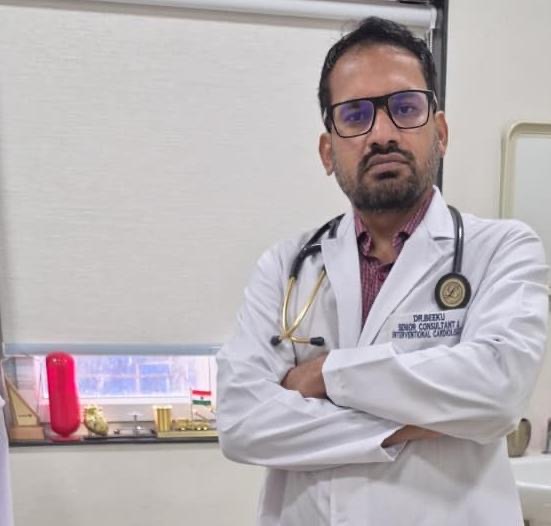
Need Post-Angioplasty Follow-Up Care?
Ensure optimal stent healing and long-term heart protection. Book your follow-up appointment with Dr. Beeku Naik DS.
Book Follow-Up Visit